
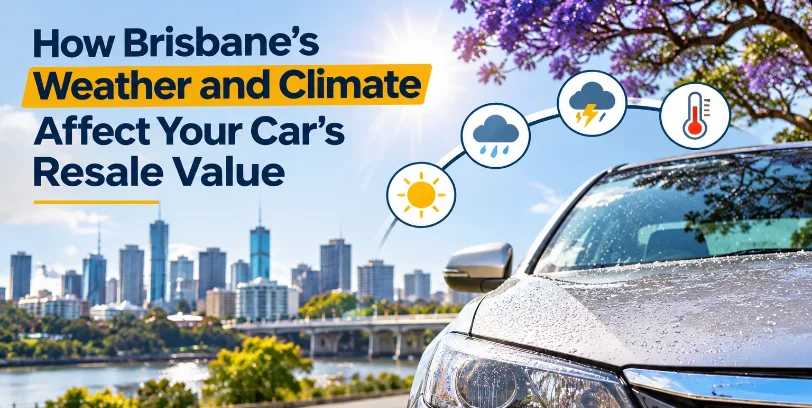
Four separate forces are at work, and only one of them is visible. Hail dents panels, flooding writes cars off outright, and both are obvious the day they happen. Ultraviolet light and subtropical humidity do their damage over years without a single dramatic moment, and between them they account for most of what Brisbane’s climate quietly takes off a vehicle’s value.
Owners assume the storm is the expensive part. For a few cars it is. For most, the expensive part was the twelve years of sun and damp before it. Anyone weighing up cash for cars Brisbane options is looking at a vehicle shaped by all four, and it helps to know which ones a buyer prices and which ones they barely glance at.
What follows runs through the Brisbane weather year rather than a list of car parts, because that is how the damage arrives.
October to March: Storm Season Does the Visible Damage
The wet season produces Brisbane’s dramatic vehicle damage, concentrated into a few months. The Bureau of Meteorology’s Brisbane climate averages show rainfall loaded heavily into the summer half of the year, and the storms that deliver it bring three distinct problems.
Hail: Loud, Expensive, and Mostly Cosmetic
A severe hailstorm can dent every horizontal panel on a car in under five minutes. Bonnet, roof, boot lid, and sometimes the windscreen and rear glass.
Here is the part that surprises owners. On a late-model vehicle, hail is costly, because panel work across an entire car runs into thousands and the insurer may well write it off. On an older vehicle sold for its recoverable content, hail dents change the figure very little. The engine still runs, the converter is untouched, and the steel still weighs what it weighed. A dimpled roof is not a value stream.
The exception is glass. A smashed windscreen and broken side windows do register, because laminated glass has to be separated before it can be processed rather than resold.
Flooding: The One That Genuinely Ends a Vehicle
Inundation is different in kind, not degree. Water reaching the interior destroys carpet, seats, and trim, and water reaching the engine bay or the loom does damage that cannot be reversed. Silt settles where nothing can flush it out, and corrosion runs from the inside out.
Depth decides everything. Water to the sill line is survivable. Water over the dashboard is not. A vehicle driven into floodwater that then stopped is worse again, because water drawn into a running engine usually bends a connecting rod.
Flood vehicles are frequently classified as written-off, and the Queensland rules for that classification are set out in the state’s written-off vehicle scheme. Our separate guide on flood-damaged cars in Brisbane covers what happens next, and the terminology is untangled in written off versus wrecked versus totalled.
Wind and Falling Limbs
The least discussed and the most locally variable. Brisbane’s older suburbs are heavily treed, and a storm that drops a limb across a parked car produces pillar damage that is structural rather than cosmetic. A creased pillar removes the onward resale route entirely.
Important Read: How to Sell My Car for Cash in Brisbane Without Stress: A Step-by-Step Local Guide
Year-Round: Ultraviolet Light Is the Slow One
Brisbane carries a high ultraviolet index for most of the year, and unlike hail, UV never stops. It is the largest single reason a fifteen-year-old Brisbane car looks older than the same car kept further south.
Clear Coat Failure
The top layer of modern automotive paint is a clear protective coat, and ultraviolet light breaks down the resins in it. The failure pattern is consistent: horizontal surfaces first, because they face the sun directly. Roof, bonnet, boot lid. The clear coat goes cloudy, then chalky, then it peels away in sheets and leaves the bare colour coat exposed.
Once the clear coat has gone, the paint beneath has no protection and oxidises quickly. Red and black vehicles show it earliest, because those pigments are less UV-stable.
Interior Degradation
A closed car in a Brisbane car park in February runs far hotter than the ambient air, and the dashboard is the hottest surface in it. Dashboards crack, door trims warp, seat fabric fades on the driver’s side, and leather dries and splits.
For a cash valuation, this is almost entirely irrelevant, which is worth saying plainly, because owners apologise for cracked dashboards constantly.
Rubber and Plastic
This one does matter. Door and window seals, wiper blades, radiator hoses, drive belts, and suspension bushes all harden and crack under prolonged UV and heat. Perished seals let water into the cabin, which feeds the humidity problem below, and perished hoses fail. A cooling failure on a hot day is how a great many Brisbane engines end their lives.
The Humidity Nobody Accounts For
Brisbane’s subtropical climate keeps relative humidity high for much of the year. This is the force owners understand least, because nothing about it shows until something stops working.
Electrical Connectors
Moist air reaches multi-pin connectors throughout the vehicle and builds resistance at the pins. The result is the intermittent fault: a sensor that codes occasionally, a window switch that works four times out of five, a camera that drops out. These are maddening to diagnose and cheap to fix once found, and the diagnostic labour frequently costs more than the part.
Important Read: Ultimate Guide to Cash for Cars Brisbane in 2026: How to Get the Best Price Fast
Mould and Cabin Damp
Once a door seal has perished, humid air and rain get into the cabin and stay. Carpet underlay holds moisture indefinitely, and mould follows. On a private sale this is a serious problem; on a vehicle valued for its components, it barely registers.
Corrosion Away From the Coast
Inland Brisbane vehicles do rust, which surprises people who associate corrosion with the beach. Humidity alone is enough once paint has failed, and the places it concentrates are the ones that stay damp: the base of the windscreen, boot floor and spare wheel well, inner sills, and the seams around wheel arches. It is slower than coastal corrosion, and it follows a different pattern, which we cover in coastal rust versus mechanical damage.
What a Buyer Actually Deducts for Weather Damage
Translating that into a figure is simpler than it looks. Weather damage sorts into three tiers, and only one of them moves the number much.
Cosmetic weather damage changes almost nothing. Hail dents, failed clear coat, faded paint, a cracked dashboard, and mouldy carpet all fall here. They affect a private sale considerably and a cash offer hardly at all, because the value sits in components and weight rather than appearance.
Mechanical weather damage is deducted at roughly what it costs to fix. Perished hoses and belts, a cooked cooling system, corroded electrical connectors, and seized components after long periods standing in the weather.
Structural and inundation damage moves the vehicle between value streams. A creased pillar, or an interior that went underwater, removes onward resale entirely. The vehicle stops being priced as a car and starts being priced as recoverable content. That is the largest single deduction weather can cause. The wider calculation is in what determines your car’s cash value, and the ranking of damage types in which type of car damage pays the most.
Why Two Identical Brisbane Cars End Up Different
Three variables explain most of the gap between neighbours running the same model.
Shelter is the largest by a distance, and it does more for UV than for rain. A garaged car loses its clear coat years later than a street-parked one and keeps its seals pliable. A carport helps substantially, because it blocks the overhead sun.
Whether the car moves matters too. One driven regularly ventilates its own interior and keeps brake components working. One that sits for months holds damp, grows mould, and seizes.
Suburb matters less than people think for UV and humidity, which are fairly uniform across the city, but a great deal for flooding. Properties near the river and the creek systems carry a flood history that vehicles parked on them inherit.
Important Read: How to Get Cash for Cars Brisbane Without a Roadworthy
A Ten-Minute Check Against the Brisbane Year
You can place your own vehicle without any equipment.
- Look along the roof and bonnet at a low angle. Cloudiness is clear coat failure; flaking is the stage after.
- Squeeze the radiator hoses and check the drive belts. Hard, glazed, or cracked means heat and UV have done their work.
- Press the door seals. Hardened seals that no longer spring back are letting water in.
- Lift the boot carpet and spare wheel cover. Moisture or surface rust here is the humidity signature.
- Check whether the cabin smells musty with the doors closed. That is underlay holding water.
- Ask yourself honestly whether the vehicle has ever been inundated, and to what depth.
The first five are ordinary ageing in this climate. The sixth is the one that changes a figure.
Where That Leaves a Brisbane Seller
Two conclusions follow, pointing in opposite directions.
If the car is newer and still has real road value, shelter is worth arranging and perished seals and hoses are worth replacing. If the car is older and the weather has already had its decade, none of that spending returns itself. Repainting a vehicle with failed clear coat costs more than the value it adds, every time.
The useful thing to know is that a weather-beaten Brisbane car is usually worth more than it looks, because the parts carrying the value are the ones the weather reaches last. A cash for cars Brisbane quote takes about two minutes on 0435 955 334, and vehicles lose value for other reasons too, which we cover in has your used car lost value in 2026.
What Brisbane Sellers Say
“Very quick and reliable” — Logan T. ★★★★★
“Good service, very efficient service” — Maria P. ★★★★★
Find Out What Yours Is Worth
Hail-dented, sun-faded, flood-affected, or simply tired after fifteen Brisbane summers. Our cash for cars Brisbane service pays up to $9,999, with free collection and payment on the spot.
- Call 0435 955 334 — 6 AM to 8 PM, seven days
- Storm-damaged and written-off vehicles collected — see cash for damaged cars
- No repairs, roadworthy or registration needed — car removals
Frequently Asked Questions
How does Brisbane’s weather affect my car’s resale value?
Through four forces. Hail dents panels and barely changes a cash offer. Ultraviolet light destroys clear coat, interior plastics, and rubber seals. Humidity corrodes electrical connectors and causes cabin damp and inland rust. Flooding is the only one that reliably ends a vehicle.
Does hail damage make my car worthless?
No, and the effect is smaller than owners expect. On a vehicle valued for its recoverable content, dents on the roof, bonnet, and boot lid change the figure very little, because the engine, gearbox, converter, and steel are untouched. Broken glass registers more than dented panels.
Is a flood-damaged car worth anything in Brisbane?
Usually yes, though less than before the water. Depth decides it. A vehicle inundated above the dashboard loses its interior and electrical system, but the engine, gearbox, converter, wheels, and steel remain recoverable, so a cash for cars Brisbane buyer still has a figure for it.
Why does car paint fail so quickly in Brisbane?
Because the ultraviolet index stays high for most of the year and never pauses. UV breaks down the resins in the clear coat, which fails on horizontal surfaces first, then goes chalky and peels. Once it has gone, the colour coat beneath oxidises quickly.
Does humidity cause rust away from the coast?
Yes. Humidity alone drives corrosion once paint has failed, and it concentrates where moisture stays: the base of the windscreen, the boot floor and spare wheel well, the inner sills, and the seams around the wheel arches. It is slower than coastal corrosion, but it does not require salt.
Should I repaint a sun-damaged car before selling it?
Almost never on an older vehicle. A respray costs substantially more than the value it adds, and a cash for cars Brisbane offer is built from components and weight rather than appearance. On a newer car with genuine road value, the calculation can differ, but failed clear coat is usually a signal to sell rather than spend.
Does a garage really make that much difference in Brisbane?
More than anything else, an owner controls, mainly because of ultraviolet light rather than rain. A garaged vehicle keeps its clear coat, dashboard, and seals intact for years longer than a street-parked one. A carport achieves most of the same benefit.
Weather caught up with your car? Call 0435 955 334 or contact A2Z Car Removals for a free quote.
Comments are closed