
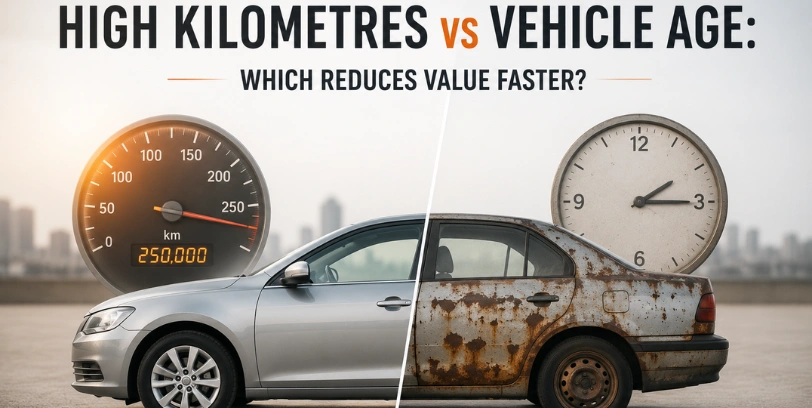
When Ipswich car owners consider selling their vehicle, two numbers dominate the conversation: the year it was made and the number on the odometer. Both matter for valuation purposes, but they matter in different ways—and understanding the distinction can help you set realistic expectations about what your car is worth.
The debate between age and mileage affects everything from private sale pricing to what cash for old cars Ipswich services will pay. A 2015 vehicle with 280,000 kilometres and a 2005 vehicle with 120,000 kilometres present very different value propositions—but which is actually worth more? A2Z Car Removals pays up to $9,999 for vehicles across Ipswich, and this guide explains the factors that actually drive those valuations.
Understanding How Kilometres Affect Vehicle Value
Odometer readings matter because they indicate mechanical wear. Every kilometre driven puts stress on engine components, transmission systems, suspension, brakes, and countless other parts that eventually require replacement. High-kilometre vehicles have simply used up more of their mechanical lifespan.
What Counts as High Kilometres in Australia?
Australian driving conditions and distances mean our kilometre expectations differ from other markets. The average Australian drives approximately 12,000-15,000 kilometres annually. A vehicle with kilometres significantly above this average—say, 25,000+ per year—accumulates wear faster than typical.
For Ipswich drivers, commutes to Brisbane or surrounding industrial areas often push annual kilometres higher. A vehicle used for daily commuting from Ipswich to Brisbane can easily accumulate 25,000-30,000 kilometres annually, reaching 200,000+ kilometres while still relatively young in years.
How Kilometres Impact Different Vehicle Components
Engine wear: Internal engine components—pistons, rings, bearings, valve guides—all wear with use. Oil changes slow this process but can’t stop it entirely. By 250,000-300,000 kilometres, many engines show measurable wear affecting compression, oil consumption, and efficiency.
Transmission wear: Automatic transmissions are particularly sensitive to high kilometres. Clutch packs, seals, and internal components degrade over time. Many transmissions require major servicing or replacement between 200,000-300,000 kilometres.
Suspension and steering: Bushings, ball joints, tie rod ends, and shock absorbers all wear with every bump absorbed. Ipswich roads—particularly in older suburbs and rural areas—accelerate this wear compared to smooth highway driving.
Understanding How Age Affects Vehicle Value
Vehicle age impacts value through different mechanisms than kilometres. While odometer readings indicate mechanical wear, age reflects both time-based deterioration and market perception factors that have nothing to do with how much the car was driven.
Time-Based Deterioration
Certain vehicle components degrade with time regardless of use. Rubber seals, hoses, and bushings dry out and crack. Brake fluid absorbs moisture. Coolant loses its protective properties. Battery capacity diminishes. These deterioration processes occur whether the car is driven daily or sits in a garage.
In Queensland’s climate—with its humidity, heat, and UV exposure—time-based deterioration can be particularly aggressive. Interior plastics fade and crack. Paintwork oxidises. Weather seals degrade. A 15-year-old vehicle in Ipswich shows its age even with relatively low kilometres.
Technology and Safety Obsolescence
Older vehicles lack safety and technology features that modern buyers expect. A 2005 vehicle—regardless of how few kilometres it has—lacks features like reversing cameras, Bluetooth connectivity, modern airbag systems, and electronic stability control that are standard on current models.
This technology gap affects private sale value significantly. Buyers comparing a low-kilometre 2005 model against a higher-kilometre 2018 model often prefer the newer vehicle for its features, safety ratings, and compatibility with modern expectations.
Parts Availability and Support
As vehicles age, manufacturer support diminishes. Parts become harder to source. Specialised knowledge for older systems becomes scarce. Eventually, maintaining an older vehicle requires searching car wreckers and specialised suppliers rather than standard parts stores.
This parts availability issue affects both ongoing maintenance costs and vehicle value. A car that’s difficult or expensive to repair is worth less than one with readily available components.
The Verdict: Which Factor Matters More?
For Ipswich car owners, the honest answer is: it depends on the context. Different buyers—private individuals, dealers, and cash for cars Ipswich services—weight these factors differently.
For private sales: Age often matters more than kilometres because private buyers are influenced by technology expectations, safety perceptions, and the stigma attached to “old” vehicles. A 2018 model with 180,000 kilometres may sell faster than a 2008 model with 100,000 kilometres.
For cash for cars services: The calculation differs because professional buyers assess vehicles on multiple value streams—parts potential, metal content, and specific component values. A well-maintained older vehicle may offer better parts than a high-kilometre newer one with more wear on mechanical components.
For practical ownership: Kilometres typically indicate impending maintenance needs more accurately than age. A 200,000+ kilometre vehicle is statistically more likely to need major work soon than a 100,000 kilometre vehicle, regardless of their relative ages.
How Service History Changes the Equation
One factor that modifies both age and kilometre considerations is service history. A high-kilometre vehicle with complete, dealer-stamped service records demonstrates that maintenance was performed properly throughout its life. This documented care can offset some of the value reduction from high odometer readings.
Conversely, a low-kilometre older vehicle with no service records raises questions. Why are the kilometres so low? Has it been properly maintained during long storage periods? Without documentation, buyers must assume the worst.
For A2Z Car Removals assessments, service history provides useful context but doesn’t fundamentally change the valuation approach. Whether serviced meticulously or neglected entirely, the vehicle’s current condition—mechanical function, parts availability, and material content—determines its worth.
Ipswich-Specific Considerations
Ipswich vehicles often accumulate higher-than-average kilometres due to commuting patterns. The distance to Brisbane, combined with limited local employment options, means many Ipswich residents drive substantial distances daily. This affects the local used car market in specific ways:
Higher-kilometre vehicles are common: Ipswich buyers are more accepting of higher odometer readings than Brisbane buyers because the local vehicle population skews toward working commuter cars rather than low-kilometre city runabouts.
Utes and work vehicles dominate: Ipswich’s industrial character means commercial vehicles, utes, and work trucks are common. These vehicles are valued differently—often by their remaining work capacity rather than strict age or kilometre metrics.
Practicality over prestige: The Ipswich market values reliable, economical vehicles over luxury or prestige models. A high-kilometre Toyota or Mazda may hold value better locally than a lower-kilometre European luxury vehicle.
What Ipswich Sellers Say About A2Z Car Removals
“Very quick and reliable” — Logan T. ⭐⭐⭐⭐⭐
“Great service easy and quick to work with and fair” — Connor K. ⭐⭐⭐⭐⭐
“Good service 👍 very efficient service” — Maria P. ⭐⭐⭐⭐⭐
Frequently Asked Questions
Is 200,000 kilometres too high for a used car?
Not necessarily. Many modern vehicles run reliably beyond 300,000 kilometres with proper maintenance. However, 200,000+ kilometre vehicles do require more frequent servicing and are statistically closer to major component failures. The specific make, model, and maintenance history matter more than the number alone.
Should I buy an older car with low kilometres?
Low-kilometre older vehicles can be good value, but investigate why the kilometres are low. A car that sat unused for years may have deteriorated seals, stale fluids, and other time-based issues. A well-maintained older vehicle driven regularly is often in better condition than one that sat idle.
How do cash for cars services value high-kilometre vehicles?
Professional cash for cars Ipswich services assess the vehicle’s total value—including parts potential and material worth—rather than just considering kilometres. A high-kilometre vehicle with valuable components can still be worth significant money.
Does the type of kilometres matter?
Yes. Highway kilometres are generally easier on vehicles than city stop-start driving. A vehicle with 200,000 highway kilometres may be in better mechanical condition than one with 150,000 kilometres of inner-city commuting.
At what age should I consider selling my car?
There’s no fixed age threshold. The decision should be based on your annual running costs compared to the vehicle’s value and reliability. When repair bills exceed what you’d reasonably spend on a replacement, or when the car becomes unreliable, it’s time to consider selling.
Do you buy both high-kilometre and old cars?
Yes. A2Z Car Removals purchases vehicles regardless of age or odometer reading. We assess each vehicle on its current condition and provide fair offers based on actual worth.
Find Out What Your Ipswich Vehicle Is Actually Worth
Whether your car has high kilometres, significant age, or both, A2Z Car Removals provides fair, honest assessments. We pay up to $9,999 cash for vehicles across Ipswich, with free removal and same-day service is often available.
▸ All ages and kilometres accepted — no vehicle too old or too travelled
▸ Fair market valuations — based on actual condition
▸ Free removal — we come to you anywhere in Ipswich
▸ Cash on the spot — paid immediately at pickup
▸ Same-day service — is often available
Call 0435 955 334 today for your free quote. We’re available 6 AM to 8 PM, 7 days a week.
Comments are closed