
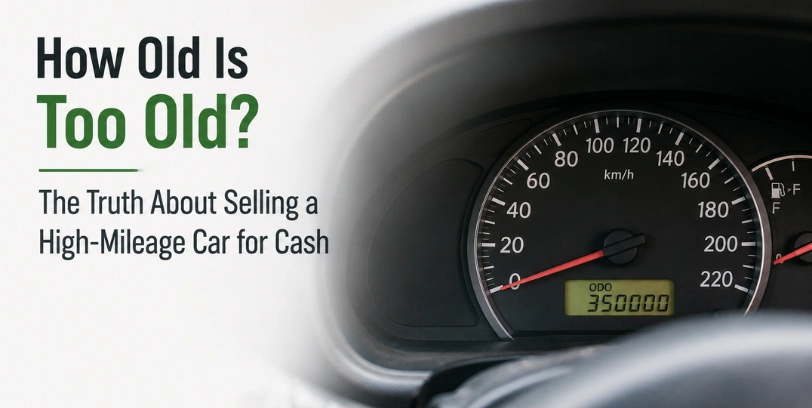
Your odometer shows 300,000 kilometres. The car turned 20 last year. Every time you think about selling, the same question stops you: is this thing even worth anything anymore, or have I crossed some invisible line where old cars become worthless?
Here’s what years of buying old cars across Brisbane has taught us: there’s no magic age or mileage where vehicles suddenly lose all value. The relationship between age, kilometres, and cash value is far more nuanced than most people realise, and understanding it helps you make better decisions about your vehicle’s future.
A2Z Car Removals purchases vehicles of all ages throughout Brisbane. We’ve bought cars from the 1970s and cars from this decade. Let us share what actually determines whether an older vehicle retains meaningful value.
Common Myths About Old Car Value
Before exploring what actually matters, let’s address some persistent misconceptions that lead Brisbane vehicle owners to undervalue their older cars.
Myth: Cars Over 200,000km Are Worthless
This belief stems from an era when 200,000 kilometres genuinely represented end-of-life for many vehicles. Modern cars, particularly those manufactured from the 2000s onward, routinely exceed 300,000 or even 400,000 kilometres with proper maintenance.
More importantly, high mileage doesn’t erase the value of body panels, interior components, electronics, or even mechanical parts that haven’t worn significantly. A well-maintained high-mileage vehicle often has better components than a low-mileage car that was neglected.
Myth: Cars Over 15 Years Old Have No Market
Age certainly affects traditional resale markets — dealerships and private buyers often prefer newer vehicles. However, the cash-for-cars and auto recycling industries view older vehicles differently. We’re purchasing recoverable value, not showroom appeal.
Older vehicles from popular manufacturers often have stronger parts demand than newer models simply because more of them exist on the road and need maintenance. A 2008 Toyota Corolla might fetch better prices than you’d expect because Corolla parts move quickly in the secondhand market.
Myth: Nobody Wants Cars That Don’t Run
Running condition affects value, but non-running vehicles absolutely have worth. Professional car buyers aren’t purchasing vehicles to drive them home — we’re purchasing them to recover value through parts salvage and material recycling. Whether the engine starts matters less than the overall recoverable content.
What Actually Determines an Old Car’s Value
Rather than arbitrary age or mileage cutoffs, these factors genuinely affect what your older vehicle is worth:
Make and Model Popularity
This is arguably the most important factor for older vehicles. Popular models maintain parts demand long after their production ends because owners of similar vehicles need replacement components. Toyota, Mazda, Hyundai, and Ford dominate Brisbane’s roads, meaning parts from these brands move quickly through recycling channels.
Conversely, rare or unpopular models may struggle to find buyers willing to pay premium prices. A 1998 Toyota Camry with 350,000km might genuinely be worth more than a 2005 obscure European import with 150,000km simply because Camry parts have ready buyers.
Overall Condition Beyond Mechanical
Interior condition, body panel integrity, and rust levels matter significantly. A high-mileage car with a clean interior, solid body, and minimal rust has substantial parts value regardless of engine condition. Queensland’s relatively dry climate means Brisbane vehicles often have less rust damage than those from southern states, which is a genuine advantage.
Look beyond whether the car runs. Consider whether seats are torn, whether door trims are damaged, whether exterior panels are dented or rusted through. These factors affect value independently of age and mileage.
Completeness
Complete vehicles are worth more than stripped ones. Every component removed before sale reduces the overall offer because it reduces recoverable value. This seems obvious, but many owners remove parts hoping to sell them separately without realising the reduction in their vehicle offer often exceeds what they’ll actually receive for individual components.
Unless you have immediate buyers lined up for specific parts at prices exceeding their contribution to vehicle value, keeping your car complete typically maximises total return.
Current Market Conditions
Scrap metal prices, parts demand, and economic conditions all fluctuate. These market factors affect what buyers can offer regardless of your vehicle’s inherent qualities. You can’t control the market, but understanding that offers reflect current conditions rather than permanent vehicle value helps set realistic expectations.
Real Examples: What Brisbane’s Older Cars Are Worth
Here are typical values we see for older vehicles in 2026, based on actual transactions rather than theoretical calculations:
15-20 year old popular sedans (Camry, Corolla, Mazda 3): $300-1,500 depending on condition and whether they run. Well-maintained examples with good bodies command the upper range even with high kilometres.
20-25 year old popular models: $200-800 typically. Parts demand remains for these vehicles, though diminishing availability of buyers for certain components affects values.
25+ year old vehicles: $150-600 for common models. At this age, metal content and any particularly desirable components drive value. Some 1990s 4WDs actually command premium prices due to enthusiast demand.
High-mileage utes (300,000km+): $800-3,000+ surprisingly strong prices because ute parts demand remains exceptional. Tray bodies, tailgates, and mechanical components from HiLux and Ranger models have ready markets regardless of overall vehicle mileage.
Older luxury vehicles: Variable and often disappointing. Premium brands have expensive components but smaller buyer pools for secondhand parts. A 15-year-old BMW might fetch less than a same-age Camry despite original cost differences.
When Is the Right Time to Sell an Older Car?
Beyond age and mileage, certain situations signal it’s time to convert your older vehicle into cash:
Repair costs exceed value: When a mechanic quotes repairs exceeding what the car would be worth after those repairs, you’ve reached the economic end of ownership. The car still has value — just not as a functioning vehicle for you.
Registration renewal doesn’t make sense: Safety inspection failures requiring expensive repairs to pass often indicate it’s time to sell. Spending $2,000 to register a car worth $3,000 doesn’t make financial sense.
The car sits unused: Vehicles deteriorate faster when parked than when driven. If your older car has been sitting for months or years, selling now preserves more value than waiting while tyres flatten, batteries die, and seals dry out.
You’ve replaced it: Keeping an old car “just in case” while a newer vehicle handles your transport needs rarely makes sense. The old car depreciates, occupies space, and the theoretical future value never materialises.
Selling Your Older Vehicle: What to Expect
The process of selling an older vehicle for cash is straightforward once you understand how professional buyers operate.
Contact a reputable buyer with your vehicle details: make, model, year, approximate mileage, and honest condition assessment. Mention any significant issues like mechanical problems, body damage, or missing components. Based on this information, you’ll receive a preliminary quote.
If the quote works for you, arrange a collection time. The buyer will inspect the vehicle upon arrival, confirm the quote (or adjust if condition differs significantly from description), pay cash on the spot, and remove the vehicle at no cost to you.
The entire process typically takes less than an hour of your time on collection day, and you walk away with cash rather than an aging vehicle you weren’t using anyway.
What Brisbane Sellers Say
“Very quick and easy. Really nice bloke. Highly recommend.”
– Tamas D. ⭐⭐⭐⭐⭐
“Good service, very efficient.”
– Maria P. ⭐⭐⭐⭐⭐
“Earlier pick up, very helpful and polite.”
– Stacey M. ⭐⭐⭐⭐⭐
Frequently Asked Questions
What’s the oldest car you’ll buy?
We don’t have an age cutoff. We’ve purchased vehicles from the 1970s through to current models. Age affects value but doesn’t disqualify any vehicle from purchase.
Does high mileage mean my car is worth nothing?
No. High-mileage vehicles contain valuable components regardless of odometer readings. Body panels, interior parts, and many mechanical components have value independent of total kilometres driven.
Should I repair my old car before selling?
Generally not worthwhile. The cost of repairs rarely increases the sale price by an equivalent amount. Sell as-is and let the buyer handle any needed work.
My car hasn’t run in years. Is it still worth something?
Yes. Long-stored vehicles may have additional issues from sitting, but they retain parts and material value. We purchase non-running vehicles regularly.
Do I need current registration to sell an old car?
No. Many older vehicles have expired registration. You need proof of ownership, but current registration isn’t required for sale to a licensed buyer.
How do you determine value for very old cars?
We assess parts demand for the specific make and model, overall condition, completeness, and current scrap metal values. Vintage vehicles with enthusiast followings may have surprising value due to parts scarcity.
Get Your Older Car Valued
Stop wondering what your high-mileage vehicle is worth. Contact A2Z Car Removals for a no-obligation quote based on your car’s actual recoverable value.
● All ages and mileages considered
● Cash payments up to $9,999
● Free removal across Brisbane
● Same-day service is often available
● Running or not, we’re interested
● Operating 6 AM – 8 PM, seven days
Call for your quote: 0435 955 334
Cash for Old Cars Brisbane | All Services | Contact Us
_________________________________________________________________________________________________________
A2Z Car Removals – Buying Brisbane’s older vehicles at fair prices.
Coastal Vehicle Lifespan | Sunshine Coast Owners Guide
[…] repair bill makes selling the better option works through the same comparison, and the guidance on selling a high-mileage car applies equally […]